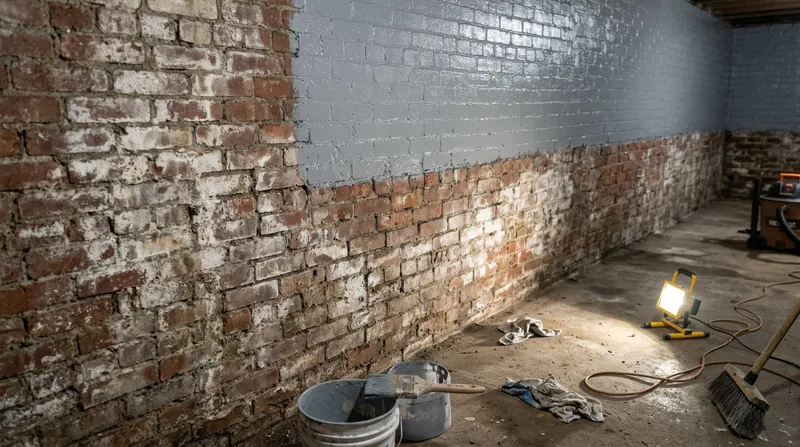




If your cellar walls sweat every summer or show white salt bloom after a rain, Basement Wall Sealing in New Bedford is often the first honest step before anyone talks you into excavation. The city's housing stock tells the story: 1880s to 1920s triple-deckers and two-families in the South End, North End and Acushnet Heights sit on granite, fieldstone and early brick cellars, many of them close to the water table. Across Fort Rodman, Pope's Island and the west side, 1920s to 1950s Capes and ranches still drain through old clay footing tiles that have long since silted shut. Out on the newer subdivisions, poured-concrete walls are tighter but the sandy glacial outwash and marine silt near the harbor hold groundwater high. Nor'easters, heavy autumn rain and spring snowmelt push that water against the wall, and damp salt air keeps the masonry wet long after the storm passes. We prep, clean and seal those walls, and we tell you plainly when a sealer will help and when the real problem is hydrostatic pressure. Start with a free basement inspection and we will show you what the wall is actually doing.
Why Damp Cellar Walls Are a New Bedford Problem, Not a Cosmetic One
Sealing a wall is not the same job on a 1912 triple-decker as it is on a 2005 colonial. On the older cellars, the wall is granite or fieldstone laid with lime mortar, and it was never meant to be waterproof, only to hold back soil. Water moves through the stone and mortar by capillary action, and the salts it carries show up as efflorescence on the inside face. On poured walls in the outer subdivisions, the seepage usually comes through cold joints, tie holes and hairline shrinkage cracks instead. Both cases look like "damp walls," but they call for different prep and different sealers.
- The water table near the Acushnet River and the harbor sits high enough that some low lots on the South End stay wet well into June.
- Old clay footing drains under pre-war Capes have collapsed or root-filled, so water backs up against the footing instead of running away.
- Freeze-thaw cycles split parging and open mortar joints, which then wick water straight into the cellar.
- Downspouts that dump within two feet of the foundation push roof water into the same soil the wall has to hold back.
None of those are solved by paint, and that is exactly why we inspect before we quote a sealer.
Key info: A fieldstone cellar wall in Acushnet Heights that shows efflorescence but stays dry to the touch after a storm is a good candidate for sealing. The same wall with water running at the cove base after every nor'easter is a hydrostatic pressure problem, and a sealer alone will trap moisture and fail. We check both before recommending anything.
For the state's own guidance on contractor licensing and homeowner protections, the Massachusetts Office of Consumer Affairs and Business Regulation publishes the rules we work under.
How We Prep, Clean and Seal a Basement Wall in New Bedford
The sealer is the last step, not the first. Most callbacks on wall sealing come from skipping surface prep, so we spend the time on the wall before a drop of product goes on. On older masonry we hand-scrape loose mortar and parging, wire-brush the efflorescence off, and let the wall dry to a stable moisture reading. On poured walls we chip out honeycombing and open any active crack so the material can actually bond. Then we mask, apply and cure according to the product data sheet, not the weather forecast.
- We walk the interior and exterior, check the cove base, window wells and grading, and take moisture readings on the wall face.
- We remove efflorescence, loose parging, old paint and any failing sealer with wire brushes and low-pressure washing.
- We fill voids and open joints with a compatible mortar or hydraulic cement and let them cure.
- We apply the penetrating or membrane sealer in the specified coats, keeping the wall within the manufacturer's moisture range.
- We extend downspouts, correct obvious grading and note any crack that needs injection rather than coating.
If the inspection turns up active seepage at a crack or a high water table, we say so and point you to the right repair instead of selling a coating that will peel.
Key info: On a 1920s bungalow near Pope's Island, we found the wall was damp but not leaking. Efflorescence removal and a breathable penetrating sealer solved it, and we extended two downspouts to the curb. No excavation, no drain tile. On a 1950s ranch in the North End with water at the cove base after every storm, we recommended an interior drain tile system instead, because sealing that wall would have trapped the pressure behind it.
Sealing Methods We Use and When Each One Fits
There is no single sealer that is right for every wall in this city. A product that works on a poured foundation in a 1990s subdivision can trap moisture in a lime-mortar fieldstone cellar. We match the method to the wall type, the moisture reading and the source of the water, and we explain the tradeoff before the work starts.
| Approach | Description | Best for |
|---|---|---|
| Penetrating sealer | Soaks into the masonry and reacts with free lime to block capillary movement without a surface film. | Damp, efflorescent granite and brick walls that are not actively leaking. |
| Breathable membrane | Flexible coating that bridges hairline cracks but still lets vapor escape. | Poured concrete walls with minor seepage and cold-joint dampness. |
| Crack injection | Epoxy or polyurethane resin forced through injection ports to fill a crack full depth. | Active leaks at a defined vertical or diagonal crack, not general wall dampness. |
| Parging repair plus sealer | Rebuild failed parging with compatible mortar, then seal the sound surface. | Older masonry where the original parging has spalled from freeze-thaw. |
| Drainage correction | Downspout extensions, grading and footing drain work to drop the water table at the wall. | Walls that stay wet because water is being fed to the foundation. |
We will tell you when two of these need to be combined, and when sealing is simply the wrong call.
Basement Wall Sealing Cost in New Bedford: What to Expect
Most residential wall sealing jobs in New Bedford start around $1,500, and that figure covers a typical single-wall or partial-perimeter job with normal prep. The number moves from there based on square footage, wall type and how much prep the masonry needs. A rough fieldstone cellar with heavy efflorescence takes more labor than a clean poured wall of the same size, and that labor is what drives the price, not the sealer itself.
- Wall area and ceiling height drive the material and labor quantity more than any other factor.
- Fieldstone and early brick need more prep and a breathable product, which costs more than a standard concrete sealer.
- Active cracks that need injection are quoted separately from the coating work.
- Access matters in tight South End side yards and in cellars with low headroom or mechanical obstructions.
- Combining sealing with drainage correction adds scope, and we itemize it so you can see the split.
Get two or three written estimates and compare what is actually included, not just the bottom line. Our full pricing overview breaks down how we build a quote.
Basement Wall Sealing Near Me: How to Vet a Contractor Around New Bedford
Plenty of outfits will coat a wall and cash the check. The difference shows up two winters later when the coating blisters off a wet fieldstone cellar. Ask for the license and insurance certificate before work starts, and confirm the coverage is current, not just that a policy exists. Get at least two written estimates that spell out prep steps, product names and what happens if the wall is wetter than expected. Ask for local references on the same wall type as yours, because a poured-wall reference tells you nothing about granite.
Permits are commonly required for structural foundation repair and for work that alters drainage or the sanitary connection of a sump discharge, and thresholds vary by jurisdiction, so confirm with the New Bedford building department before scheduling. Ask any contractor how they handle that step. If you want to talk through your wall before you commit, contact us and we will set up the inspection.
Basement Wall Sealing in New Bedford: Pricing Guide
| Service | Price | Details |
|---|---|---|
| Single wall, penetrating sealer | Starting at $1,500 | Includes efflorescence removal, prep and one coat on a standard poured or masonry wall. |
| Partial perimeter, breathable membrane | Starting at $2,400 | Covers two to three walls with prep, masking and two coats on sound masonry. |
| Fieldstone or early brick cellar | Starting at $3,200 | Extra hand prep and repointing drive the rate on 1880s to 1920s New Bedford cellars. |
| Crack injection add-on | Starting at $450 | Epoxy or polyurethane injection at a defined crack, quoted separately from coating work. |
| Complex or large-scale job | On estimate | Full perimeter, heavy prep or combined drainage work needs an on-site look first. |
| Estimate | Free | Response within 24h at (774) 425-8595, no obligation to book. |
Indicative pricing, the exact cost depends on square footage, finish, and site access. Free personalized estimate within 24h at (774) 425-8595.


