



New Bedford sits on glacial outwash and marine silt, and the harbor and Acushnet River keep groundwater close to the surface on low lots. In the South End, North End and Acushnet Heights, 1880s to 1920s triple-deckers and two-families still ride on granite, fieldstone or early brick cellar walls that have been taking hydrostatic pressure for a century. Across Fort Rodman, Pope's Island and the west side, 1920s to 1950s Capes, bungalows and ranches show up with partial or full basements and tired clay footing drains. Foundation Crack Repair in New Bedford starts with reading the crack, not with a tube of caulk. A hairline in a poured wall and a stepped crack in a granite cellar are two different problems, and we treat them that way. If water is already finding the floor, start with a free basement inspection.
Why Foundation Cracks Open Up in New Bedford's Old Cellars and Newer Poured Walls
The dominant failure mode here is water pushed against the wall by a high water table after nor'easters, heavy autumn rain and spring snowmelt. Sandy glacial outwash near the harbor drains fast but sits wet, and the dense clay pockets inland hold water against the foundation for days. Old granite and fieldstone walls weep through mortar joints, while 1990s to 2020s poured-concrete basements on the outer edges crack at shrinkage points and cold joints. The freeze-thaw cycle widens whatever is already there.
- Vertical cracks in poured walls usually trace back to concrete shrinkage and are prime candidates for injection.
- Stepped cracks in brick or block often signal settling, especially where silt washes out under the footing.
- Horizontal cracks and inward lean point to soil pressure and need a structural look, not a patch.
- White efflorescence and damp patches mean water is moving through the wall, even when the floor stays dry.
- Rust stains or movement at the cove joint suggest the footing drain is failing and water is backing up.
We tell homeowners plainly when a crack is cosmetic and when it is the visible sign of a drainage problem that a patch will not fix.
Key info: On a triple-decker off Acushnet Avenue, a 1/8-inch vertical crack was leaking only during nor'easters. Epoxy injection closed it in under two hours. Two streets over, a stepped crack in a 1910 brick cellar kept reopening because the clay footing drain was crushed, and that job needed drainage work before any injection would hold.
Structural foundation repair commonly requires a permit, and thresholds vary by jurisdiction, so verify the rules with the City of New Bedford building department before work begins.
How We Diagnose and Repair Foundation Cracks in New Bedford
Every crack gets inspected before it gets a method. We map the crack direction, width and depth, check for movement with a level and plumb line, look at the cove joint and the footing drain, and test whether water is hydrostatic or surface-driven. That determines whether injection is enough or whether the wall needs structural support. We do not sell a one-size-fits-all patch.
- We walk the basement and exterior, note grading and downspout discharge, and photograph each crack.
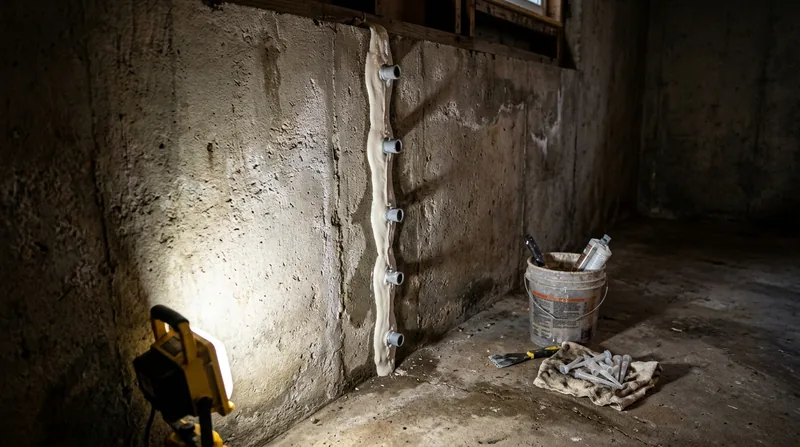
- We clean the crack, drill injection ports at the right spacing, and flush it with water or solvent.
- We inject epoxy for structural bonding or polyurethane for active leaks that need to flex with movement.
- We cap the ports, remove them, and finish the surface so the wall reads clean.
- For wider or shifting cracks, we recommend carbon fiber straps or wall anchors after a structural assessment.
If the inspection shows the crack is only a symptom of water pressure, we point you to an interior drain tile system rather than charging for an injection that will fail next spring.
Key info: In a 1950s ranch near Pope's Island, the crack was dry most of the year but leaked every March. Polyurethane injection handled the active seep, and extending the downspouts plus regrading the low side stopped the surface water feeding it. Same crack, two causes, two fixes.
Repair Methods We Match to Each Crack
Not every crack calls for the same product. The table below shows how we match method to condition, from a hairline shrinkage crack in a 2005 poured wall to a leaking fieldstone joint in a South End cellar.
| Approach | Description | Best for |
|---|---|---|
| Epoxy injection | Structural epoxy bonds crack faces back together and restores wall strength. | Dry, non-moving vertical cracks in poured concrete |
| Polyurethane injection | Flexible foam expands with water and seals active leaks. | Wet or seeping cracks, cold joints, hairline leaks |
| Mortar and parging repair | We rake out failed mortar and repoint with a compatible mix. | Weeping joints in granite and fieldstone cellar walls |
| Carbon fiber straps | Straps arrest inward movement on a bowing wall. | Horizontal cracks and early wall bowing |
| Wall anchors | Anchors pull a leaning wall back toward plumb. | Significant bowing where exterior access is limited |
When a crack is structural, we bring in the right method rather than forcing an injection to do a job it cannot do.
Foundation Crack Repair Cost in New Bedford: What to Expect
Most single-crack injections in New Bedford start at $450 and run upward from there. The figure moves with crack length, wall material, whether the leak is active, and how many ports the job needs. A short vertical crack in a poured wall is a different ticket from a full-height fieldstone joint that needs repointing before injection. Getting two or three estimates is smart, and we will tell you when a simple seal is all you need.
- Crack length and width drive port count and material volume.
- Granite, fieldstone and brick walls take longer than poured concrete.
- Active leaks may need polyurethane instead of epoxy, which changes the product cost.
- Access behind finished walls or mechanicals adds labor.
- Structural findings can shift the job from injection to straps or anchors.
Our full pricing overview breaks down the ranges so you can compare like for like.
Foundation Crack Repair Near Me: Choosing a Contractor Near New Bedford
Hiring for foundation crack repair near New Bedford means checking three things before anyone touches the wall: license and insurance, a written scope that names the repair method, and references from local basements like yours. Ask whether the company is a waterproofing specialist or a general foundation firm, because the diagnosis and the fix differ. Ask who pulls the permit if structural work is involved, and confirm the warranty is transferable.
- Confirm licensed and insured status and ask for a certificate before work starts.
- Get two or three written estimates with the method spelled out, not just a price.
- Ask for references from New Bedford, Fall River or Acushnet jobs with similar wall types.
- Verify permit requirements with the local building department for structural repair.
- Check HOA or historic district rules if your triple-decker sits in a regulated area.
When you are ready, contact us for a free estimate and we will inspect the crack and explain the options in plain terms.
Foundation Crack Repair in New Bedford: Pricing Guide
| Service | Price | Details |
|---|---|---|
| Single crack epoxy injection | Starting at $450 | Includes port drilling, epoxy injection and cleanup for one poured-wall crack. |
| Active leak polyurethane injection | Starting at $550 | Flexible foam for wet or seeping cracks, priced by crack length and port count. |
| Fieldstone or brick repointing plus injection | On estimate | Older masonry walls need mortar work before injection, so we price after inspection. |
| Structural repair (straps or anchors) | On estimate | Bowing or shifting walls need an on-site structural assessment before a number is given. |
| Travel | Included | In New Bedford and surrounding areas, no separate call-out or mileage fee. |
| Estimate | Free | Response within 24h at (774) 425-8595, no obligation to book. |
Indicative pricing, the exact cost depends on square footage, finish, and site access. Free personalized estimate within 24h at (774) 425-8595.


