The Ground Beneath Your Feet: New Bedford Sandy Soil and Water
If you own a home in New Bedford, you already know that the ground here is a little different. Much of southeastern Massachusetts sits on glacial outwash and coastal plain deposits, which means the soil under many properties is sandy, gravelly, or layered with silt. Sandy soil drains quickly in dry weather, which sounds like a good thing. But when the water table rises, that same loose, porous material becomes a highway for groundwater. It moves sideways through the sand and silt until it finds the path of least resistance: your foundation.
This is why so many local cellars struggle with dampness that seems to appear out of nowhere. It is not always a visible crack or a broken gutter. Sometimes the water is simply migrating through the soil and pushing against your basement walls as hydrostatic pressure. Homeowners in Acushnet and Fall River see the same pattern, especially in low-lying neighborhoods near the harbor and the Acushnet River. Understanding the local soil is the first step toward fixing the problem for good.
High Groundwater Basement Leaks: When the Water Table Rises
High groundwater basement leaks are one of the most common calls we get. In coastal communities like New Bedford, the water table can sit surprisingly close to the surface, and it does not stay put. A wet spring, a heavy nor'easter, or even a week of steady rain can push the water table up several feet. When that happens, water seeks the easiest route into your home, and that route is often through the cove joint where the floor meets the wall, or through the porous concrete block itself.
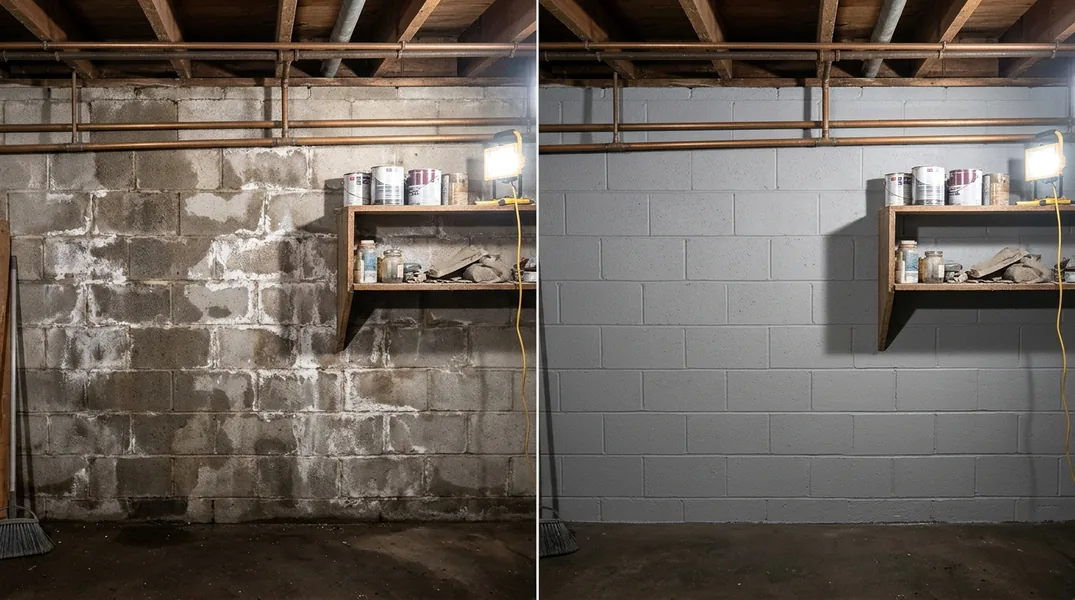
The tricky part is that high groundwater does not always leave obvious signs. You might see efflorescence (that white, chalky powder on the walls), a musty smell, or dampness along the base of the wall. In worse cases, you get standing water after every storm. Because the source is below and around the foundation rather than above it, patching a crack from the inside rarely solves the problem. You need a system that manages water before it enters, which is why a proper Interior Drain Tile System is often the right answer for local homes.
Massachusetts Foundation Cracks and Soil Movement
Massachusetts foundation cracks are not just a cosmetic issue. They are often the visible result of soil movement. Sandy and silty soils shift with the seasons. In a wet fall, the ground swells. In a dry summer, it settles. That constant cycle of expansion and contraction puts stress on foundation walls, especially older poured concrete and stone foundations common in this region. Over time, hairline cracks widen, and water finds its way in.
Soil movement also affects the footing and the slab. If the ground under one corner of your home settles more than the rest, you can get differential movement, which opens gaps at the cove joint and can even crack the floor. This is why we look at the whole picture, not just the crack you can see. A thorough assessment often includes checking drainage, grading, and the condition of the foundation itself. If you are seeing cracks that seem to be growing or recurring, it is worth getting a professional opinion before the next wet season. You can request a free estimate to find out what is really going on.
Basement Leak Causes Near Me: What Local Homeowners Should Check
When people search for basement leak causes near me, they usually want a checklist they can walk through themselves. Start outside. Look at the grade around your foundation. Does the soil slope toward the house? If so, rainwater is being directed straight at your basement walls. Check your gutters and downspouts. If they discharge within a few feet of the foundation, you are essentially watering your own basement. Extending downspouts several feet away and regrading the soil are simple, low-cost steps that can make a real difference.
Next, look inside. Is there a musty smell? Are the walls damp to the touch? Do you see white powder or peeling paint on the lower blocks? These are signs that moisture is already present. Also check for plumbing leaks and condensation, which can mimic basement leaks and confuse the diagnosis. If you have addressed the obvious exterior issues and still have water, the cause is likely groundwater or a foundation issue that needs a more permanent solution. That is where Basement Waterproofing comes in, and it is worth talking to a local specialist who knows the soil here.
Foundation Waterproofing Near Me: Solutions That Match the Soil
There is no one-size-fits-all fix for a leaking basement, and that is especially true in southeastern Massachusetts. A home in a low-lying area with high groundwater may need an interior drainage system that captures water at the cove joint and directs it to a sump pump. A home on a slope with sandy soil might benefit more from exterior work, including proper grading, drainage board, and a waterproof membrane applied to the outside of the foundation. Sometimes both approaches are needed to solve a persistent problem.
Foundation Waterproofing is about more than stopping water today. It is about protecting the structural integrity of your home for years to come. Water intrusion can weaken mortar, rust rebar, and create an environment for mold. Addressing it early is almost always less expensive than waiting. If you are unsure which approach fits your home, a professional assessment can save you time and money. We serve homeowners throughout the area, including Somerset, and we are happy to explain your options in plain language.
Basement Waterproofing Cost in New Bedford: What to Budget
Homeowners often ask what basement waterproofing cost in New Bedford looks like. The honest answer is that it depends on the cause, the size of the space, and the solution required. A simple crack injection or exterior regrading project costs far less than a full interior drain tile system with a sump pump. Exterior excavation is more labor-intensive and therefore typically carries a higher price tag. The good news is that most reputable contractors offer a range of options, so you can prioritize the work that delivers the most protection for your budget.
It is also worth remembering that waterproofing is an investment in your home's value. A dry basement adds usable square footage and prevents the kind of hidden damage that can lead to expensive structural repairs later. When you request a pricing consultation, ask for a clear breakdown of what is included, whether there is a warranty, and what kind of maintenance the system requires. If you would like to talk through your situation, call New Bedford Waterproofing at (774) 425-8595. We are glad to help you understand the causes and choose a solution that makes sense for your home.
Looking for a professional basement waterproofing contractor in New Bedford? New Bedford Waterproofing responds fast for all your basement waterproofing needs.
Get a Free QuoteOur services: Basement Waterproofing · Interior Drain Tile System · Exterior Basement Waterproofing