Why Older Homes in New Bedford Are Prone to Foundation Problems
If you own an older home in New Bedford, you already know that character comes with quirks. But some quirks are more serious than others, especially when they show up below grade. Many of the city's triple deckers and early 20th century houses were built with fieldstone or early poured concrete foundations that have spent a century absorbing New England's freeze-thaw cycles, coastal moisture, and shifting soils. Over time, even the most solid foundation can develop foundation problems signs that homeowners should not ignore.
The region's high water table and heavy spring rains put constant pressure on basement walls. When drainage is poor or gutters discharge too close to the house, water finds its way into the soil around the foundation and pushes inward. For older homes, this is often the beginning of older home foundation repair needs that, if caught early, are far less expensive to address. Understanding what to look for below grade is the first step toward protecting your investment.
Basement Wall Cracks: What They Mean and When to Worry
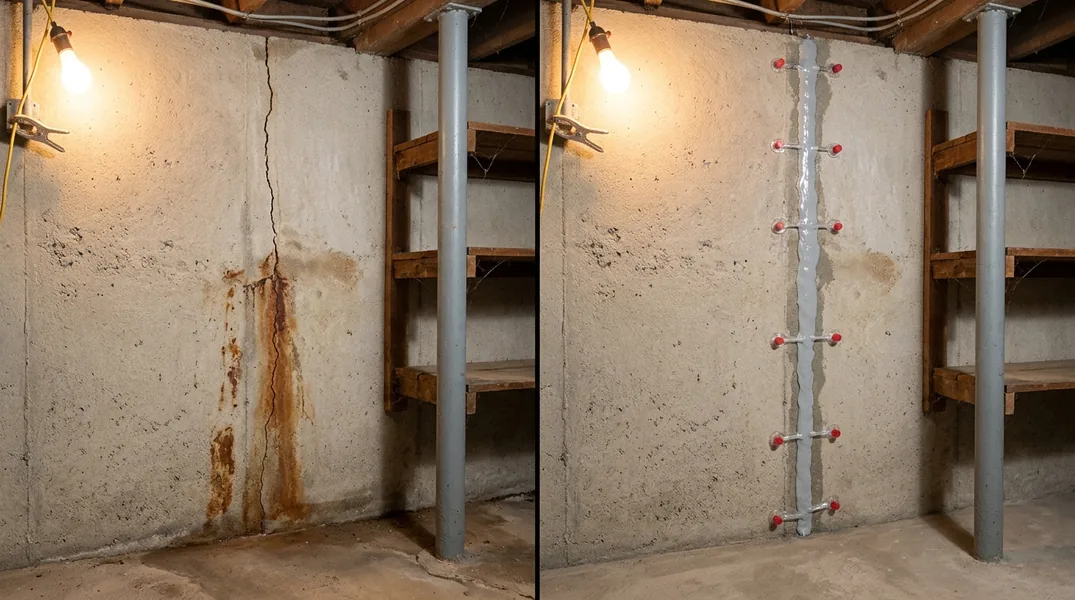
Not every crack is a crisis, but every crack tells a story. Hairline vertical cracks in poured concrete are often caused by shrinkage as the concrete cured and may be relatively benign. However, horizontal cracks, stair-step cracks in block walls, and cracks that are wider at one end than the other are red flags. These basement wall cracks often indicate soil pressure, settling, or water intrusion that is actively weakening the structure. If you can fit a coin or a pencil into a crack, it is time to have a professional take a look.
In triple deckers, cracks can be especially tricky because the foundation carries significant load from multiple stories. A crack that seems minor on the surface may be part of a larger pattern of movement. Homeowners should also watch for efflorescence, the white powdery residue left behind when water evaporates through masonry. It is a clear sign that moisture is moving through the foundation. Addressing these issues early with Foundation Waterproofing can prevent small cracks from becoming structural headaches.
Bowing Basement Walls and Triple Decker Foundation Warning Signs
A bowing basement wall is one of the most serious signs of foundation trouble. When a wall bulges inward, it means the pressure from outside soil and water has exceeded what the wall can handle. You might notice the wall leaning away from the floor joists above, or you may see diagonal cracks at the corners. In a triple decker foundation, bowing walls are particularly concerning because the entire structure above depends on that foundation for stability. Ignoring a bowing wall can lead to costly structural repairs and even safety hazards.
Other warning signs include doors and windows that stick or no longer latch properly, floors that feel uneven or sloped, and gaps appearing between the wall and ceiling. These symptoms often point to movement in the foundation. If you live in Fall River or Somerset, the same coastal conditions apply, and it is worth having a professional evaluate any bowing or shifting you observe. The sooner a bowing wall is assessed, the more options you have for repair.
Moisture, Mold, and the Hidden Cost of Waiting
Foundation problems rarely stay dry. Water seeping through cracks or porous concrete creates a damp basement environment that invites mold, mustiness, and wood rot. In older New Bedford homes, basements are often used for storage or laundry, and moisture can quietly damage belongings and air quality. If you smell a musty odor or see dark stains on the lower walls, you likely have a moisture problem that starts at the foundation. Basement Waterproofing is the best defense against this cycle, sealing out water and redirecting it away from the structure.
Waiting to address moisture can also worsen structural issues. Wet soil is heavier and exerts more pressure on walls, accelerating bowing and cracking. In some cases, an Interior Drain Tile System can capture water before it reaches the foundation, while Exterior Basement Waterproofing addresses the problem from the outside. A professional assessment will determine which approach suits your home. For homeowners in Acushnet, the same principles apply, and local expertise matters when dealing with older construction.
Foundation Repair Near Me: When to Call a Professional
If you have noticed any of the signs above, it is natural to wonder whether you can handle it yourself. While minor cosmetic cracks can be patched, structural issues like bowing walls, horizontal cracks, and persistent water intrusion require a professional eye. A qualified contractor can assess the severity, identify the root cause, and recommend the right repair method. Trying to DIY a structural fix can make matters worse and cost more in the long run. For foundation repair near me searches in New Bedford, look for a local company that understands the specific challenges of older housing stock.
New Bedford Waterproofing offers free estimate appointments to evaluate your foundation and explain your options. You can reach us at (774) 425-8595 to schedule a visit. We will walk you through what we find and provide clear pricing so you can make an informed decision. Do not wait until a small crack becomes a major repair. Early intervention is the key to protecting your home's value and safety.
Looking for a professional basement waterproofing contractor in New Bedford? New Bedford Waterproofing responds fast for all your basement waterproofing needs.
Get a Free QuoteOur services: Basement Waterproofing · Interior Drain Tile System · Exterior Basement Waterproofing